
IVF vs IUI: 12 Key Differences to Choose the Right Fertility Treatment in Nepal
-1783317174.png)
IVF vs IUI
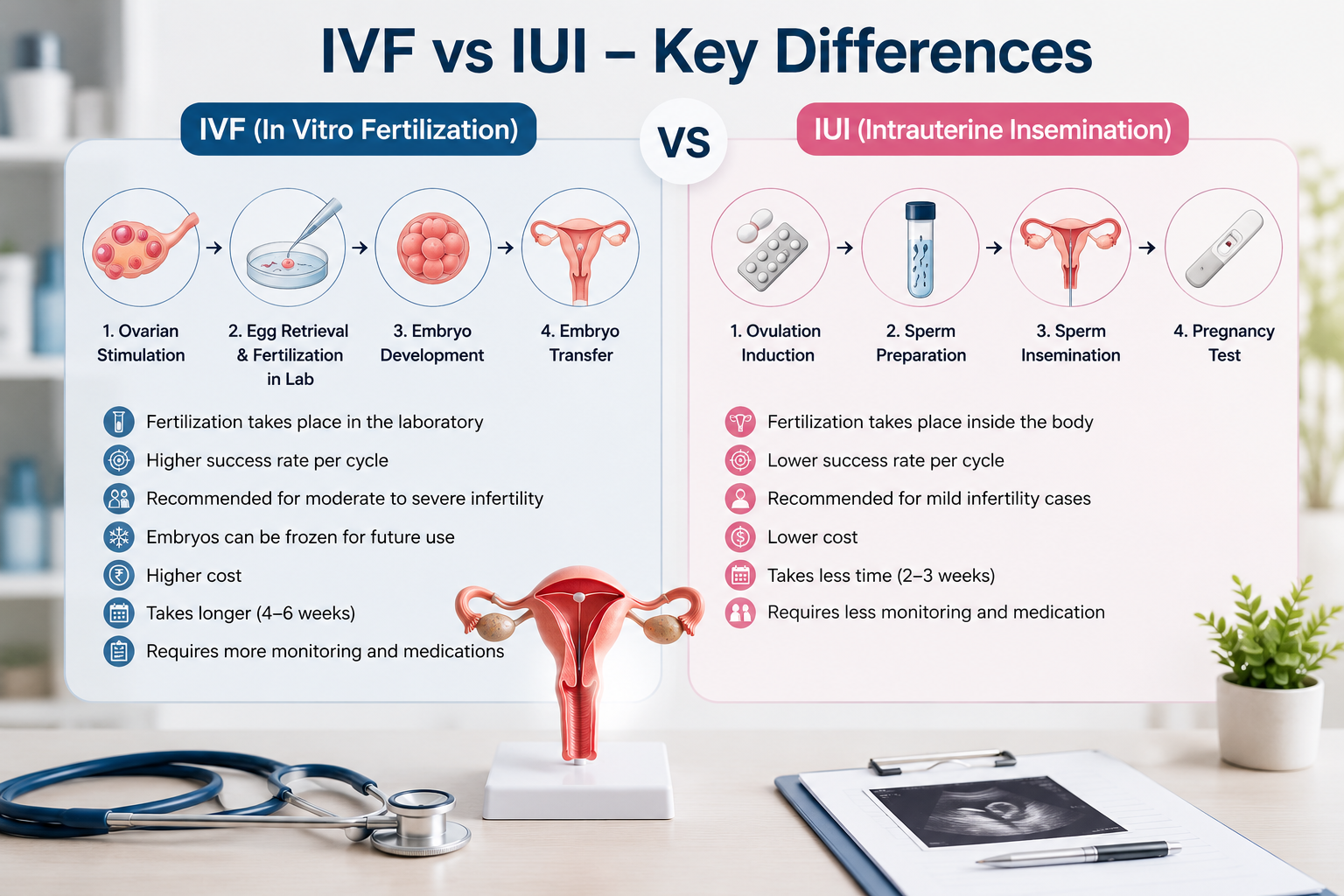
If you're comparing IVF vs IUI, the main difference lies in where fertilization takes place. During Intrauterine Insemination (IUI), specially prepared sperm is placed directly into the uterus to increase the chances of natural fertilization inside the body. In contrast, In Vitro Fertilization (IVF) involves fertilizing eggs with sperm in a specialized laboratory before transferring the resulting embryo into the uterus. While IUI is generally simpler, less invasive and more affordable, IVF offers higher success rates and is often recommended for couples facing more complex fertility challenges.
Key Takeaways
- IVF and IUI are both assisted reproductive treatments designed to help individuals and couples achieve pregnancy.
- IUI is often considered the first-line treatment for mild infertility and unexplained infertility.
- IVF is typically recommended for moderate to severe infertility, blocked fallopian tubes, severe male infertility, recurrent IVF failures, or advanced maternal age.
- IVF generally has a higher success rate than IUI but is more complex and costly.
- The most appropriate treatment depends on age, fertility diagnosis, medical history and recommendations from a fertility specialist.
- A comprehensive fertility evaluation is essential before deciding between IVF and IUI.
Understanding IVF vs IUI
Choosing between IVF vs IUI can feel overwhelming, especially if you are beginning your fertility journey. Many couples hear these terms during their first consultation with a fertility specialist but may not fully understand how the treatments differ, when each is recommended, or which option offers the best chance of success.
Although both treatments are designed to help individuals and couples conceive, they differ significantly in terms of procedure, complexity, success rates, costs and medical indications. Understanding these differences is an important step toward making an informed decision based on your unique fertility needs.
Infertility affects millions of couples worldwide and is not solely a women's health issue. Fertility challenges may arise from female reproductive conditions, male factor infertility, combined factors, or unexplained infertility. Modern reproductive medicine now offers several assisted reproductive technologies (ART), among which IUI and IVF are the most commonly recommended.
The choice between IVF and IUI is never one-size-fits-all. Fertility specialists consider several factors before recommending a treatment plan, including:
- Age of the female partner
- Ovarian reserve and hormone levels
- Duration of infertility
- Fallopian tube health
- Sperm count and sperm quality
- Ovulation patterns
- Previous pregnancy history
- Previous fertility treatment outcomes
- Underlying medical conditions such as endometriosis or PCOS
A personalized treatment plan based on these factors often provides the highest chance of achieving a healthy pregnancy.
What Is IUI?
Intrauterine Insemination (IUI) is a fertility treatment in which carefully prepared sperm is placed directly inside the uterus around the time of ovulation. The aim is to shorten the distance sperm must travel, increasing the likelihood of fertilization occurring naturally within the fallopian tube.
Unlike IVF, fertilization during IUI still happens inside the woman's body. The procedure itself is relatively quick, minimally invasive and usually does not require anesthesia or surgery.
IUI may be performed during a natural menstrual cycle or in combination with fertility medications that stimulate the development of one or more mature eggs. Before insemination, the semen sample undergoes a laboratory preparation process known as sperm washing, which separates healthy, motile sperm from seminal fluid and other components.
The prepared sperm is then introduced into the uterus using a thin, flexible catheter. The procedure generally takes only a few minutes and most patients can return to their normal daily activities shortly afterward.
IUI is commonly recommended for:
- Mild male factor infertility
- Unexplained infertility
- Mild ovulation disorders
- Cervical mucus abnormalities
- Couples using donor sperm
- Same-sex female couples pursuing pregnancy
- Individuals with sexual dysfunction affecting conception
While IUI is less invasive than IVF, its success depends heavily on factors such as maternal age, egg quality, sperm health and the presence of at least one healthy, open fallopian tube.
What Is IVF?
In Vitro Fertilization (IVF) is one of the most advanced and effective fertility treatments available today. Unlike IUI, fertilization occurs outside the body in a highly controlled embryology laboratory.
The IVF process involves stimulating the ovaries to produce multiple mature eggs using fertility medications. Once the eggs are ready, they are collected through a minor procedure called egg retrieval. These eggs are then combined with sperm in the laboratory, allowing fertilization to occur under carefully monitored conditions.
After fertilization, the resulting embryos are observed for several days to evaluate their growth and quality. The healthiest embryo is then transferred into the uterus, where implantation and pregnancy may occur.
Because IVF allows embryologists to monitor fertilization and embryo development closely, it provides greater control over the reproductive process and often results in higher pregnancy rates than IUI, particularly for couples with more complex fertility conditions.
IVF may also include advanced laboratory techniques such as:
- Intracytoplasmic Sperm Injection (ICSI)
- Blastocyst culture
- Frozen embryo transfer (FET)
- Preimplantation Genetic Testing (PGT)
- Assisted hatching, where appropriate
These technologies can further improve treatment outcomes for selected patients.
IVF is commonly recommended for:
- Blocked or damaged fallopian tubes
- Severe male infertility
- Endometriosis
- Advanced maternal age
- Low ovarian reserve
- Multiple failed IUI cycles
- Recurrent pregnancy loss in selected cases
- Couples requiring genetic testing of embryos
- Unexplained infertility after unsuccessful initial treatments
Although IVF is more involved than IUI, advances in reproductive medicine have made the treatment increasingly safe, effective and personalized for a wide range of fertility conditions.
IVF vs IUI at a Glance
If you're deciding between IVF vs IUI, understanding how these two fertility treatments differ can help you make a more informed decision. While both aim to increase the chances of pregnancy, they differ significantly in procedure, complexity, success rates, cost, timeline and the type of fertility conditions they treat.
The table below provides a quick comparison.
| Feature | IUI (Intrauterine Insemination) | IVF (In Vitro Fertilization) |
|---|---|---|
| Fertilization | Occurs naturally inside the body | Occurs in an embryology laboratory |
| Procedure Complexity | Simple and minimally invasive | More advanced and involves multiple stages |
| Anesthesia | Not required | Required for egg retrieval |
| Treatment Duration | Approximately 2–3 weeks | Approximately 4 - 6 weeks |
| Number of Clinic Visits | Fewer | More frequent monitoring |
| Success Rate | Generally lower | Generally higher |
| Recommended For | Mild infertility | Moderate to severe infertility |
| Fallopian Tubes | At least one healthy tube required | Can be performed even if tubes are blocked |
| Male Fertility Issues | Mild male infertility | Mild to severe male infertility |
| Cost | Lower | Higher |
| Laboratory Procedures | Minimal | Advanced embryology techniques |
| Pregnancy Chance Per Cycle | Lower | Higher depending on age and diagnosis |
Although this comparison provides a general overview, the best treatment depends on your individual fertility evaluation, medical history and recommendations from a fertility specialist.
Difference 1: Where Fertilization Takes Place
The most significant distinction in IVF vs IUI is where fertilization occurs.
During IUI, fertilization takes place naturally inside the woman's fallopian tube. After sperm is placed directly into the uterus, it still needs to travel to the fallopian tube to meet the egg. This means successful fertilization depends on healthy fallopian tubes, good sperm quality and proper timing of ovulation.
In IVF, fertilization occurs outside the body in a highly controlled laboratory environment. Mature eggs are collected from the ovaries and combined with sperm under the supervision of experienced embryologists. Once fertilization occurs and embryos develop, the healthiest embryo is transferred into the uterus.
Because IVF allows specialists to monitor fertilization and embryo development, it offers greater control over the treatment process and often results in higher pregnancy rates, especially in complex fertility cases.
Expert Insight
If fallopian tubes are blocked or severely damaged, IUI is generally not recommended because natural fertilization cannot occur. IVF bypasses the fallopian tubes entirely, making it a more suitable option for many such patients.
Difference 2: Treatment Procedure
The treatment journey differs considerably between IUI and IVF.
IUI Procedure
The IUI process is relatively straightforward and typically includes:
- Initial fertility consultation
- Fertility assessment
- Ovulation tracking
- Fertility medication (if required)
- Sperm collection
- Sperm washing
- Insemination using a thin catheter
- Pregnancy test approximately two weeks later
The actual insemination procedure usually takes only a few minutes and does not require anesthesia or surgery.
IVF Procedure
The IVF process involves several carefully coordinated stages:
- Comprehensive fertility evaluation
- Ovarian stimulation with fertility medications
- Regular ultrasound and hormone monitoring
- Egg retrieval under light anesthesia
- Laboratory fertilization
- Embryo culture for several days
- Embryo transfer
- Pregnancy testing
- Follow-up monitoring
Because IVF includes multiple laboratory procedures, it is more complex but also offers greater opportunities to optimize treatment outcomes.
Difference 3: Who Is an Ideal Candidate?
Choosing between IVF vs IUI depends on the underlying cause of infertility rather than personal preference alone.
IUI May Be Recommended For
- Mild male infertility
- Unexplained infertility
- Mild ovulation disorders
- Cervical factor infertility
- Couples using donor sperm
- Women with at least one healthy fallopian tube
- Younger women with good ovarian reserve
IVF May Be Recommended For
- Blocked fallopian tubes
- Severe male infertility
- Endometriosis
- Low ovarian reserve
- Advanced maternal age
- Repeated unsuccessful IUI cycles
- Couples requiring genetic testing
- Complex infertility conditions
A fertility specialist will recommend the most appropriate treatment after reviewing fertility test results, age, reproductive history and other medical factors.
Difference 4: Success Rates
One of the most common questions couples ask is:
Which treatment has a higher success rate, IVF or IUI?
In general, IVF offers a higher chance of pregnancy per treatment cycle because fertilization occurs under controlled laboratory conditions and embryo development can be closely monitored.
IUI can also be successful, particularly for younger women with mild fertility issues, but its success depends on many natural factors that cannot be controlled.
Success rates vary based on:
- Female age
- Egg quality
- Sperm quality
- Cause of infertility
- Uterine health
- Embryo quality (for IVF)
- Lifestyle factors
- Previous treatment history
Rather than comparing overall percentages, fertility specialists focus on identifying which treatment provides the highest likelihood of success for each individual patient.
Difference 5: Treatment Timeline
Another important consideration when comparing IVF vs IUI is the amount of time required to complete each treatment cycle.
Typical IUI Timeline
| Stage | Approximate Time |
|---|---|
| Initial consultation | Day 1 |
| Fertility medications | 5–10 days |
| Ovulation monitoring | Throughout cycle |
| Insemination | Around ovulation |
| Pregnancy test | About 14 days later |
Overall, an IUI cycle is generally completed within two to three weeks.
Typical IVF Timeline
| Stage | Approximate Time |
|---|---|
| Initial consultation | Week 1 |
| Ovarian stimulation | 8 - 14 days |
| Monitoring appointments | Throughout stimulation |
| Egg retrieval | Approximately Day 12 - 14 |
| Fertilization and embryo culture | 3 - 5 days |
| Embryo transfer | Depending on treatment plan |
| Pregnancy test | Around 10 - 14 days after transfer |
A complete IVF cycle usually takes approximately four to six weeks, although timelines may vary depending on the patient's individualized treatment protocol.
Difference 6: Cost Comparison
Cost is often a major factor when deciding between IVF vs IUI, but it should be considered alongside the expected success rate, the underlying fertility condition and the likelihood of requiring multiple treatment cycles.
In general:
- IUI is less expensive because it involves fewer medications, fewer monitoring visits and no egg retrieval or laboratory embryo culture.
- IVF has a higher upfront cost due to advanced laboratory procedures, ovarian stimulation medications, egg retrieval and embryo transfer.
However, a lower-cost treatment does not always mean a lower overall investment. In some cases, couples may require several IUI cycles before moving to IVF, while others may achieve a successful pregnancy with IVF in fewer attempts. The most cost-effective approach depends on your individual fertility diagnosis and treatment plan.
If you would like to understand the factors that influence treatment pricing, you can also explore our comprehensive guide on IVF Cost in Nepal, which explains what is typically included in IVF packages, additional costs that may arise and how treatment plans vary from one patient to another.
Difference 7: Is IVF or IUI More Painful?
One of the biggest concerns for couples beginning fertility treatment is whether the procedure will be painful. When comparing IVF vs IUI, the level of discomfort differs because the procedures themselves are very different.
Does IUI Hurt?
For most women, IUI is a quick and minimally invasive procedure. It is similar to a routine gynecological examination and usually takes only a few minutes. A thin, flexible catheter is used to place specially prepared sperm directly into the uterus.
Some women experience:
- Mild cramping during the procedure
- Light spotting afterward
- Temporary pelvic discomfort
- Mild bloating if fertility medications are used
These symptoms generally resolve within a short period and most patients can return to work or resume their daily routine immediately after the procedure.
Does IVF Hurt?
IVF involves multiple stages, so the experience varies throughout the treatment cycle.
During ovarian stimulation, patients self-administer hormone injections that may cause:
- Mild abdominal bloating
- Breast tenderness
- Mood changes
- Temporary discomfort around the ovaries
The egg retrieval procedure is performed under light anesthesia or sedation, so patients typically do not feel pain during the procedure itself. Afterward, some women may experience:
- Mild pelvic soreness
- Abdominal cramping
- Light spotting
- Temporary bloating
These symptoms usually improve within a few days.
The embryo transfer procedure is generally painless and does not require anesthesia in most cases.
| Factor | IUI | IVF |
|---|---|---|
| Procedure discomfort | Minimal | Mild to moderate |
| Anesthesia required | No | Yes, for egg retrieval |
| Recovery time | Same day | Usually 1–3 days after egg retrieval |
| Return to work | Immediately | Usually within a day or two |
Expert Tip: Pain perception varies from person to person. Your fertility team will guide you through each step and discuss ways to manage any discomfort during treatment.
Difference 8: Risks and Possible Complications
Like any medical treatment, both IUI and IVF have potential risks. However, serious complications are uncommon when treatment is provided by an experienced fertility team.
Risks Associated with IUI
IUI is considered a safe procedure, but possible risks include:
- Mild infection (rare)
- Light bleeding after insemination
- Temporary cramping
- Multiple pregnancy if fertility medications stimulate more than one egg
Overall, the risk profile of IUI is relatively low.
Risks Associated with IVF
Because IVF involves ovarian stimulation and egg retrieval, there are additional considerations.
Potential risks include:
- Ovarian Hyperstimulation Syndrome (OHSS)
- Multiple pregnancy if multiple embryos are transferred
- Bleeding or infection following egg retrieval (rare)
- Ectopic pregnancy (uncommon)
- Emotional stress during treatment
- Cycle cancellation if ovarian response is inadequate
Advances in IVF protocols, individualized medication plans and careful monitoring have significantly improved safety and reduced the likelihood of complications.
Difference 9: Benefits of IVF vs IUI
Both treatments have unique advantages depending on the underlying fertility diagnosis.
Benefits of IUI
IUI offers several advantages, particularly for couples with mild fertility challenges.
Benefits include:
- Less invasive than IVF
- Shorter treatment duration
- Lower treatment cost
- Minimal recovery time
- No surgery required
- Simple outpatient procedure
- Suitable as an initial treatment option for selected patients
For many younger couples with unexplained infertility or mild male factor infertility, IUI may be an appropriate first step before considering more advanced treatments.
Benefits of IVF
IVF is one of the most effective assisted reproductive technologies available today.
Key advantages include:
- Higher pregnancy rates in appropriate candidates
- Suitable for severe infertility
- Bypasses blocked fallopian tubes
- Can overcome severe male infertility with advanced techniques such as ICSI
- Allows embryo freezing for future pregnancies
- Enables genetic testing of embryos when medically indicated
- Greater control over fertilization and embryo development
- Offers more treatment options for complex fertility conditions
Because IVF addresses a wider range of infertility causes, it is often recommended when simpler treatments are unlikely to be successful.
Difference 10: Limitations of IVF and IUI
While both treatments are effective, neither can guarantee pregnancy. Understanding their limitations helps couples set realistic expectations.
Limitations of IUI
IUI may not be suitable for everyone.
Limitations include:
- Lower pregnancy rates compared with IVF
- Requires at least one open fallopian tube
- Less effective for severe male infertility
- Limited benefit in advanced maternal age
- May require multiple treatment cycles
Limitations of IVF
Although IVF offers higher success rates, it also has certain limitations.
These include:
- More complex treatment process
- Higher treatment cost
- Requires frequent monitoring visits
- Daily hormone injections during ovarian stimulation
- Emotional and physical commitment
- Success rates still depend on factors such as age, egg quality, sperm quality and overall reproductive health
Even with advanced laboratory techniques, no fertility treatment can guarantee pregnancy in every cycle.
Difference 11: Recovery After Treatment
Recovery is another important consideration when comparing IVF vs IUI.
Recovery After IUI
Most women experience little to no downtime.
Patients are generally encouraged to:
- Continue normal daily activities
- Stay hydrated
- Follow prescribed medications
- Avoid unnecessary stress
- Attend scheduled follow-up appointments
Extended bed rest after IUI is not usually recommended unless advised by the treating physician.
Recovery After IVF
Recovery following IVF depends on the stage of treatment.
After egg retrieval:
- Rest for the remainder of the day
- Drink plenty of fluids
- Avoid strenuous exercise for several days
- Monitor for unusual symptoms such as severe pain or excessive swelling
After embryo transfer:
Patients can usually return to light daily activities, but it is important to follow the specific instructions provided by the fertility specialist regarding medications, activity levels and follow-up care.
Difference 12: Which Treatment Is Right for You?
There is no universal answer to the IVF vs IUI question. The best treatment depends on your individual circumstances.
A fertility specialist may recommend IUI if you:
- Are younger with good ovarian reserve
- Have unexplained infertility
- Have mild male infertility
- Have at least one healthy fallopian tube
- Are trying fertility treatment for the first time
IVF may be recommended if you:
- Have blocked fallopian tubes
- Have severe male infertility
- Have endometriosis affecting fertility
- Have low ovarian reserve
- Are of advanced maternal age
- Have experienced repeated unsuccessful IUI cycles
- Require advanced laboratory techniques such as ICSI or embryo freezing
Choosing the right treatment begins with a thorough fertility assessment. A personalized evaluation helps identify the most suitable approach based on your reproductive health, medical history and family-building goals.
IVF vs IUI: Decision Guide
| Your Situation | IUI May Be Suitable | IVF May Be Suitable |
|---|---|---|
| Mild unexplained infertility | ✔ | ✔ |
| Severe male infertility | ✘ | ✔ |
| Blocked fallopian tubes | ✘ | ✔ |
| Mild ovulation disorder | ✔ | ✔ |
| Advanced maternal age | Sometimes | ✔ |
| Need for embryo genetic testing | ✘ | ✔ |
| Low ovarian reserve | Sometimes | ✔ |
| Multiple failed IUI cycles | ✘ | ✔ |
Expert Insight
The decision between IVF vs IUI should never be based solely on cost or convenience. Factors such as age, fertility diagnosis, ovarian reserve, sperm quality and reproductive history play a much greater role in determining the treatment most likely to result in a healthy pregnancy.
At Vardhan IVF Nepal, fertility specialists develop individualized treatment plans after a comprehensive evaluation, ensuring that each patient receives recommendations tailored to their unique needs and long-term family-building goals.
Common Myths About IVF and IUI
There are many misconceptions surrounding fertility treatments, which can make it difficult for couples to make informed decisions. Understanding the facts behind these myths can help reduce anxiety and ensure realistic expectations.
Myth 1: IVF Is Always Better Than IUI
Fact: While IVF generally offers higher pregnancy rates, it is not automatically the best choice for every patient. For couples with mild infertility, unexplained infertility, or certain ovulation disorders, IUI may be an effective first-line treatment. The right option depends on age, fertility diagnosis, reproductive history and medical evaluation.
Myth 2: IUI and IVF Guarantee Pregnancy
Fact: Neither IUI nor IVF can guarantee pregnancy. Success depends on multiple factors, including maternal age, egg quality, sperm health, uterine health, embryo quality (for IVF) and the underlying cause of infertility.
Myth 3: IVF Always Results in Twins or Multiple Pregnancies
Fact: Advances in fertility medicine have significantly reduced the likelihood of multiple pregnancies. Today, many IVF treatments involve transferring a single healthy embryo, depending on the patient's age, embryo quality and clinical recommendations.
Myth 4: IVF Is Only for Women
Fact: Fertility challenges affect both men and women. Male factor infertility contributes to a significant proportion of infertility cases. IVF, often combined with advanced techniques such as ICSI, can effectively address many forms of male infertility.
Myth 5: Fertility Treatment Is Only for Older Couples
Fact: Fertility treatment is appropriate for adults of reproductive age who experience difficulty conceiving, regardless of age. Younger couples with conditions such as blocked fallopian tubes, severe endometriosis, or male infertility may also benefit from assisted reproductive treatments.
When Should You Move from IUI to IVF?
A common question during fertility treatment is whether it is time to transition from IUI to IVF.
The decision should always be based on a comprehensive medical assessment rather than a fixed number of treatment cycles. However, IVF may be considered when:
- Several well-timed IUI cycles have not resulted in pregnancy.
- Female age is increasing, making time an important factor.
- Male infertility is more severe than initially diagnosed.
- Fallopian tube problems are identified.
- Ovarian reserve is low.
- Endometriosis significantly affects fertility.
- A higher chance of pregnancy per treatment cycle is desired.
- Advanced reproductive techniques, such as ICSI or embryo freezing, are recommended.
A fertility specialist will review your treatment history, test results and overall reproductive health before recommending the next step.
How to Improve Your Chances of Success with Either Treatment
While no lifestyle change can guarantee pregnancy, healthy habits may support fertility and improve overall reproductive health before and during treatment.
Maintain a Healthy Weight
Both underweight and overweight individuals may experience hormonal imbalances that affect fertility. Achieving a healthy body weight through balanced nutrition and regular physical activity can support reproductive health.
Eat a Nutrient-Rich Diet
Focus on foods rich in:
- Fresh fruits and vegetables
- Whole grains
- Lean protein
- Healthy fats
- Folate
- Iron
- Omega-3 fatty acids
A balanced diet supports overall health and provides essential nutrients important for reproductive function.
Avoid Smoking and Excessive Alcohol
Smoking and excessive alcohol consumption have been associated with reduced fertility in both men and women. Avoiding these habits can help protect reproductive health and support treatment outcomes.
Prioritize Sleep
Quality sleep plays an important role in hormonal regulation and overall well-being. Aim for consistent, restorative sleep each night as part of a healthy lifestyle.
Manage Stress
The fertility journey can be emotionally challenging. While stress alone does not cause infertility, managing stress through relaxation techniques, counseling, mindfulness, or support groups may improve overall quality of life during treatment.
Follow Your Treatment Plan Carefully
Take medications exactly as prescribed, attend all scheduled monitoring appointments and communicate openly with your fertility team if you have questions or concerns throughout the process.
Questions to Ask During Your First Fertility Consultation
Preparing questions before your appointment can help you better understand your diagnosis and treatment options.
Consider asking:
- What is the likely cause of our infertility?
- Which fertility tests do we need?
- Am I a better candidate for IUI or IVF?
- What are the expected success rates based on my age and diagnosis?
- How long will treatment take?
- What medications will be required?
- Are there any risks or possible complications?
- What lifestyle changes would you recommend?
- What are the estimated treatment costs?
- If the first cycle is unsuccessful, what are the next steps?
Having clear communication with your fertility specialist allows you to make informed decisions throughout your fertility journey.
Frequently Asked Questions (FAQs)
1. What is the main difference between IVF and IUI?
The primary difference is where fertilization occurs. In IUI, fertilization takes place naturally inside the woman's body after prepared sperm is placed into the uterus. In IVF, eggs are fertilized with sperm in a specialized laboratory before an embryo is transferred into the uterus.
2. Which treatment has a higher success rate, IVF or IUI?
In general, IVF offers higher success rates per treatment cycle than IUI, particularly for moderate to severe infertility. However, the most appropriate treatment depends on individual fertility factors, age and medical history.
3. Is IUI less expensive than IVF?
Yes. IUI is generally less expensive because it involves fewer medications, fewer procedures and no laboratory fertilization or egg retrieval. The overall treatment plan should be discussed with your fertility specialist.
4. Can IUI work if sperm count is low?
IUI may be suitable for mild male factor infertility. Severe sperm abnormalities often require more advanced treatment, such as IVF with ICSI.
5. Can IVF help women with blocked fallopian tubes?
Yes. IVF bypasses the fallopian tubes entirely, making it an effective option for women with blocked or damaged tubes.
6. How many IUI cycles should I try before considering IVF?
The number of IUI attempts varies depending on age, diagnosis and response to treatment. Your fertility specialist will recommend the most appropriate approach based on your individual circumstances.
7. Is fertility treatment painful?
Most patients experience only mild discomfort. IUI is minimally invasive, while IVF involves additional steps such as hormone injections and egg retrieval, which are carefully managed to maximize patient comfort.
8. Can lifestyle changes improve fertility treatment outcomes?
Healthy lifestyle habits such as maintaining a balanced diet, avoiding smoking, limiting alcohol, managing stress and following medical advice may support overall reproductive health.
9. Which treatment is better for unexplained infertility?
Depending on factors such as age and fertility evaluation, some couples may begin with IUI, while others may benefit from IVF. A fertility specialist can recommend the most appropriate treatment plan.
10. When should I consult a fertility specialist?
It is generally advisable to seek a fertility evaluation if pregnancy has not occurred after 12 months of regular, unprotected intercourse (or after 6 months if the woman is aged 35 or older), or sooner if there are known reproductive health concerns.
Take the Next Step with Confidence
Deciding between IVF vs IUI is an important step in your fertility journey and the right choice depends on your unique medical history, fertility diagnosis, age and family-building goals. While IUI offers a simpler and less invasive option for selected patients, IVF provides advanced reproductive technology with higher success rates for many complex fertility conditions.
Rather than choosing a treatment based solely on cost or convenience, couples should undergo a comprehensive fertility evaluation to identify the approach most likely to result in a healthy pregnancy. Understanding the differences between these treatments empowers you to make informed decisions with confidence.
If you are exploring fertility treatment options in Nepal, consulting an experienced fertility specialist can help you understand your diagnosis, discuss available treatments and create a personalized plan tailored to your needs.
Why Choose Vardhan IVF Nepal?
At Vardhan IVF Nepal, every fertility journey begins with compassionate care and evidence-based treatment. Our experienced fertility specialists and embryology team provide individualized evaluations and treatment plans designed around each patient's unique circumstances. Using modern reproductive technologies, advanced laboratory support and a patient-centered approach, we are committed to helping individuals and couples take informed steps toward achieving their dream of parenthood.
Ready to take the next step? Schedule a consultation with our fertility specialists to discuss whether IUI, IVF, or another fertility treatment is the most appropriate option for your reproductive goals.